• Skip to main content
  • Skip to footer

Japanese Particles Master

particles for perfection

  • Home
  • grammar
  • particles
  • nouns
  • verbs
  • adjectives
  • adverbs
  • translation
  • Author

Recent Posts

January 10, 2022 By Masaki Mori Leave a Comment

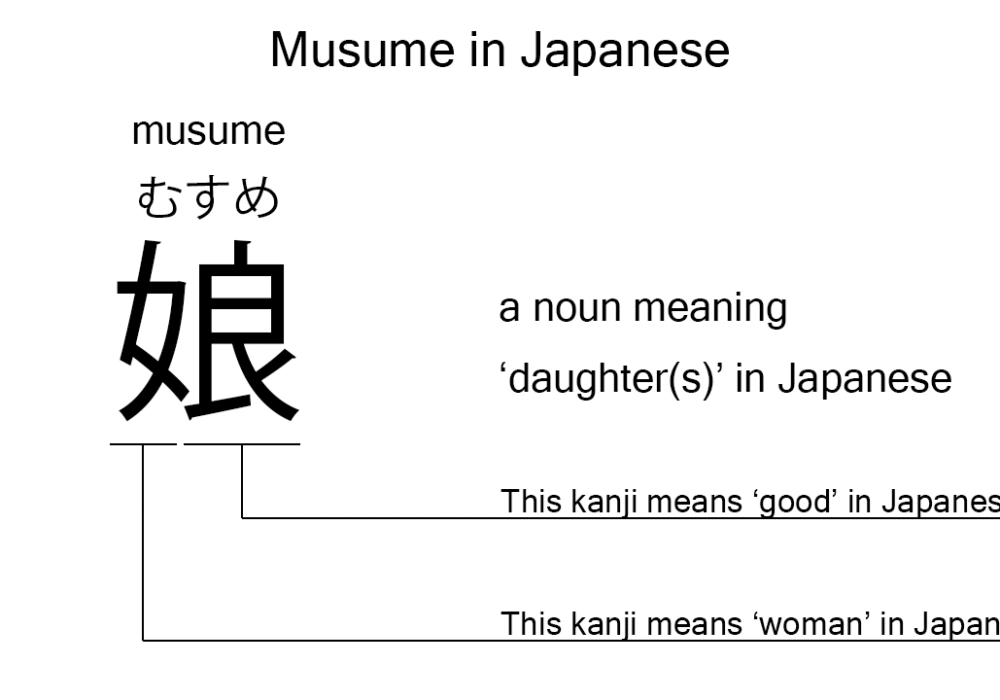
Musume is the Japanese word for ‘daughter’, explained

What does "musume" mean in Japanese? Native speakers use musume often to mean a 'daughter' in Japanese. Perhaps, some Japanese learners know this word as it is sometimes used in Japanese movies, songs, novels, manga, anime, and the like. In this blog post, however, I'm explaining this word in detail based on its …

[Read more...] about Musume is the Japanese word for ‘daughter’, explained
January 8, 2022 By Masaki Mori

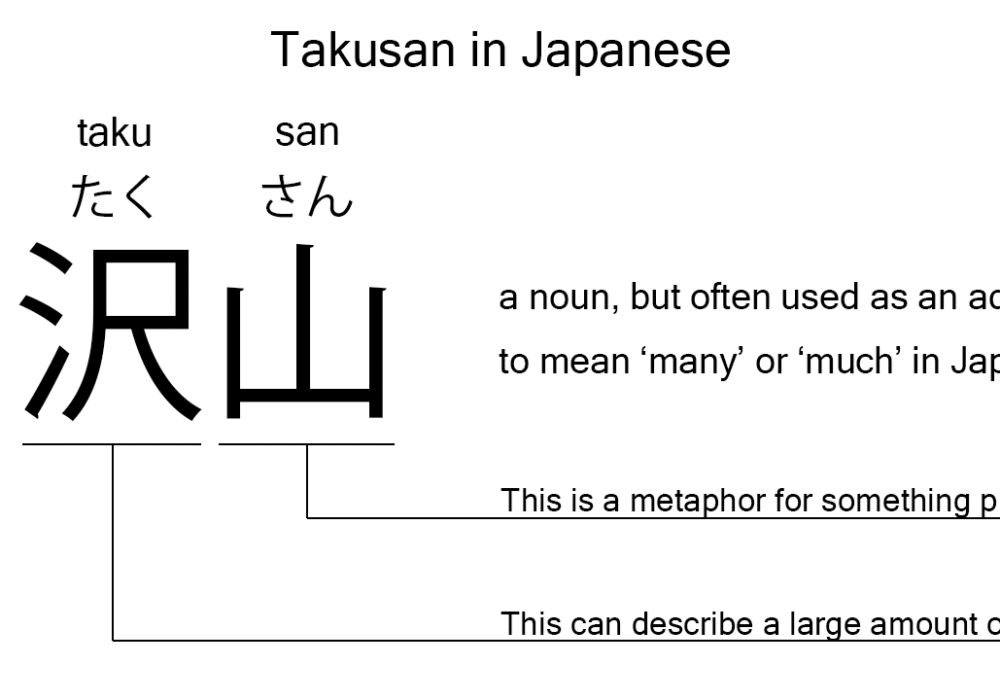
Takusan is the Japanese adverb of quantity for ‘many’, explained

What does "takusan" mean in Japanese? Grammatically "takusan" is not really an adverb, but native speakers use it quite often as an adverb of quantity to mean 'many', 'much', or such in Japanese. Usually it is written in hiragana, but in this blog post I will explain it in detail based on its kanji expression. And …

[Read more...] about Takusan is the Japanese adverb of quantity for ‘many’, explained

January 6, 2022 By Masaki Mori

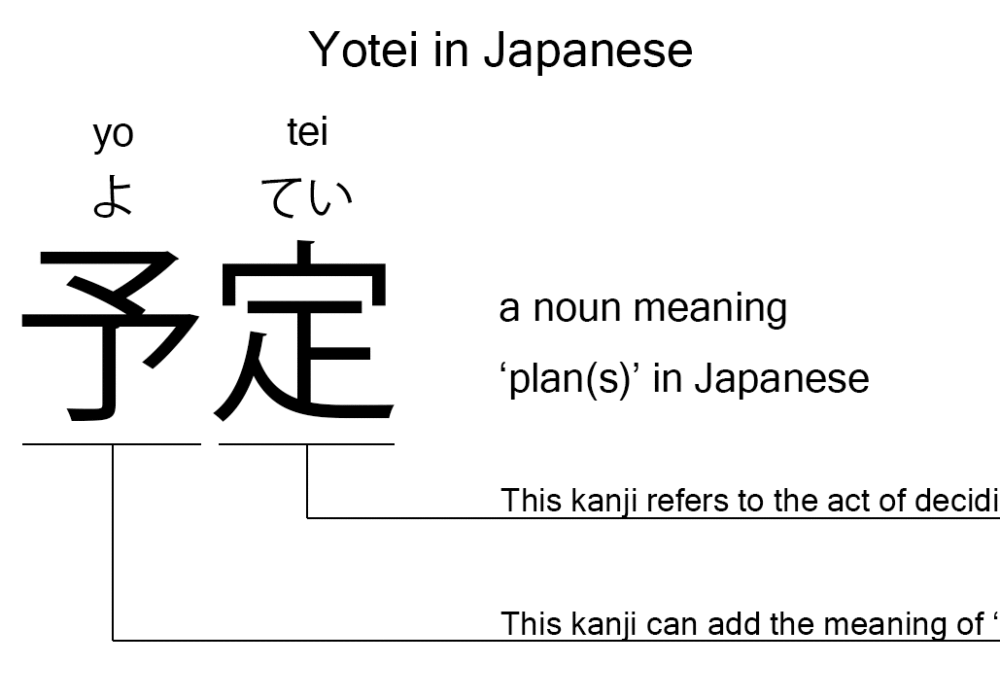
Yotei is the Japanese word for ‘plan’, explained

What does "yotei" mean in Japanese? Native speakers say "yotei" often to mean 'plan' in Japanese. Perhaps, some Japanese learners know this word as it is sometimes used in Japanese conversations. In this blog post, however, I will explain this word in detail based on its kanji expression. And also, I will explain …

[Read more...] about Yotei is the Japanese word for ‘plan’, explained

January 4, 2022 By Masaki Mori

Koko can work mainly in the three different ways in Japanese, explained

What does "koko" mean in Japanese? There are multiple ways to use "koko" in the Japanese language, but native speakers normally use it to refer to a place physically close to them, the point in time where they are, or a certain time period to or from now. In this blog post, I will explain this word in detail based …

[Read more...] about Koko can work mainly in the three different ways in Japanese, explained

January 2, 2022 By Masaki Mori

Kuro vs. Kuroi: which should we use to say “black” in Japanese?

How to say "black" in Japanese? Native speakers say "kuro" or "kuroi" to mean 'black' in Japanese. The first one is a noun; the second one is an adjective. In this blog post, I will explain these two words and how to use them through example sentences. My explanations would help Japanese learners to understand which …

[Read more...] about Kuro vs. Kuroi: which should we use to say “black” in Japanese?

December 30, 2021 By Masaki Mori

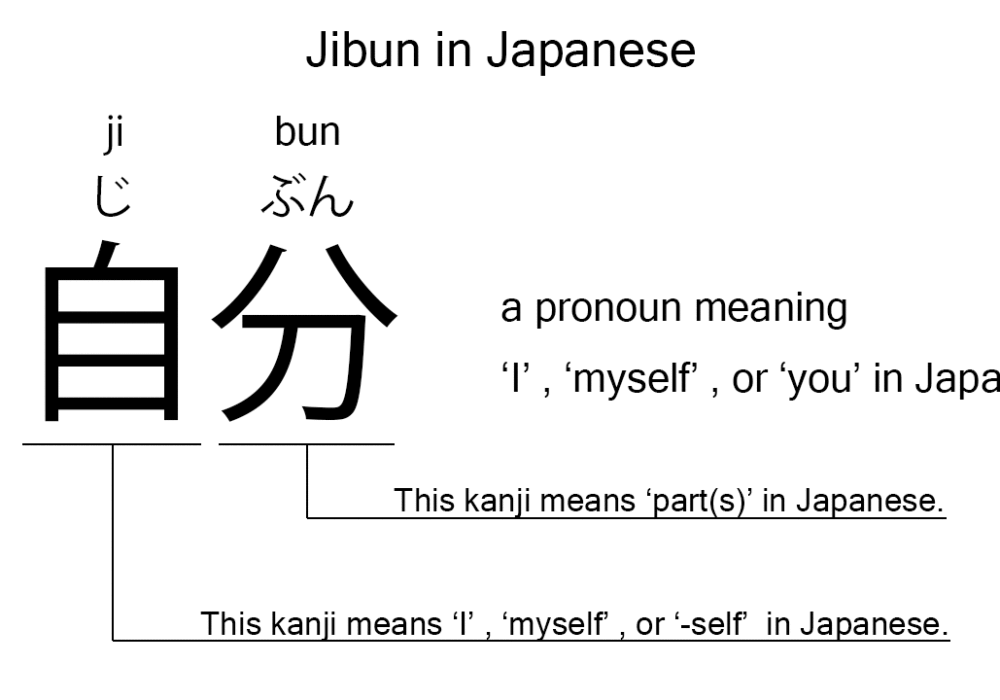
Jibun has three different meanings in Japanese: “I”, “myself”, and “you”

What does "jibun" mean in Japanese? Jibun is a Japanese pronoun. Native speakers use it in three different ways: to say "I", to say "myself", and to say "you" in Japanese. Perhaps, some Japanese learners know this pronoun as it is sometimes used in Japanese conversations. In this blog post, however, I will explain …

[Read more...] about Jibun has three different meanings in Japanese: “I”, “myself”, and “you”

December 28, 2021 By Masaki Mori Leave a Comment

Nami is the Japanese word for ‘wave’, explained

What does "nami" mean in Japanese? There are a few homophones, but native speakers use nami normally to mean a 'wave' in Japanese. Perhaps, some Japanese learners know this word as it is sometimes used in Japanese movies, songs, novels, manga, anime, and the like. In this blog post, however, I'm explaining this word …

[Read more...] about Nami is the Japanese word for ‘wave’, explained

December 26, 2021 By Masaki Mori

Shiro vs. Shiroi: which should we use to say “white” in Japanese?

How to say "white" in Japanese? Native speakers say "shiro" or "shiroi" to mean 'white' in Japanese. The first one is a noun; the second one is an adjective. In this blog post, I will explain these two words and how to use them through example sentences. My explanations would help Japanese learners to understand …

[Read more...] about Shiro vs. Shiroi: which should we use to say “white” in Japanese?

December 24, 2021 By Masaki Mori

Kuchi is the Japanese word for ‘mouth’, explained

What does "kuchi" mean in Japanese? Native speakers say "kuchi" to mean 'mouth' in Japanese. Perhaps, some Japanese learners know this word as it is sometimes used in Japanese textbooks. In this blog post, however, I will explain this word in detail together with its kanji character. And also, I will explain how to …

[Read more...] about Kuchi is the Japanese word for ‘mouth’, explained

December 22, 2021 By Masaki Mori

Ima is the Japanese word for ‘now’, explained

What does "ima" mean in Japanese? Native speakers say "ima" to mean 'now' in Japanese. Probably, many Japanese learners know this word as it is often used in Japanese conversations. In this blog post, however, I will explain its definitions and meanings in detail together with example sentences. My explanations …

[Read more...] about Ima is the Japanese word for ‘now’, explained

« Previous Page
Next Page »

Footer

Pages

  • Author

Categories

  • adjectives
  • adverbs
  • grammar
  • nouns
  • particles
  • translation
  • verbs
  • vocabulary

Written by Masaki Mori

Engineer and industrial translator for more than ten years. I teach Japanese to spread the Japanese culture. Read More…

Follow Me on Social Media

  • Instagram
  • Twitter

Feed

  • RSS

Copyright © 2017–2026 Japanese Particles Master All Rights Reserved.