• Skip to main content
  • Skip to footer

Japanese Particles Master

particles for perfection

  • Home
  • grammar
  • particles
  • nouns
  • verbs
  • adjectives
  • adverbs
  • translation
  • Author

Recent Posts

October 24, 2021 By Masaki Mori

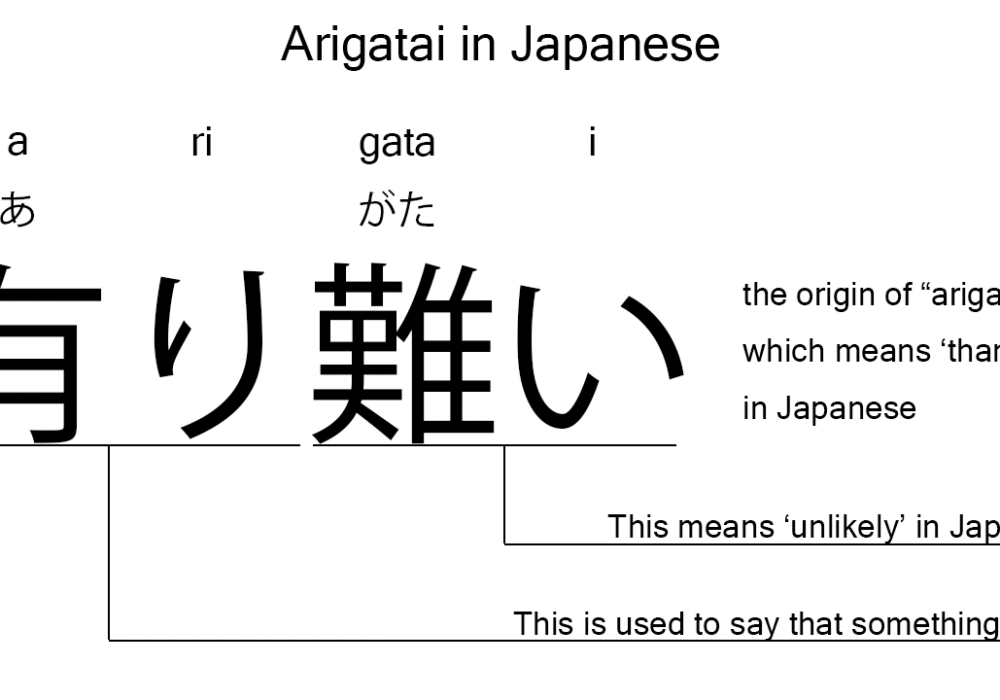
Arigato and Arigatou: Japanese phrases for appreciation

What do "arigato" and "arigatou" mean in Japanese? Honestly I didn't expect to get asked this, but native speakers often use these two phrases in the same way: to mean 'thank you' in Japanese. Probably, many Japanese learners know these phrases as both are often used in Japanese conversations. In this blog post, …

[Read more...] about Arigato and Arigatou: Japanese phrases for appreciation
July 27, 2021 By Masaki Mori Leave a Comment

Dekai is the Japanese word for ‘huge’ or ‘enormous’, explained

What does "dekai" mean in Japanese? Native speakers say "dekai" to mean 'huge', 'enormous', or just 'large' in Japanese. Very simple, I think. In this blog post, however, I will explain this word in detail based on its origin. And also, I will explain its major conjugations with example sentences. My explanations …

[Read more...] about Dekai is the Japanese word for ‘huge’ or ‘enormous’, explained

July 18, 2021 By Masaki Mori

Does hajimemashite really mean “nice to meet you” in Japanese?

What does "hajimemashite" mean in Japanese? A lot of Japanese learners understand "hajimemashite" as a Japanese greeting for 'nice to meet you'. Basically, this understanding is correct. Native speakers actually often use it to say 'nice to meet you' in Japanese. I think, however, that Japanese learners start to …

[Read more...] about Does hajimemashite really mean “nice to meet you” in Japanese?

July 4, 2021 By Masaki Mori

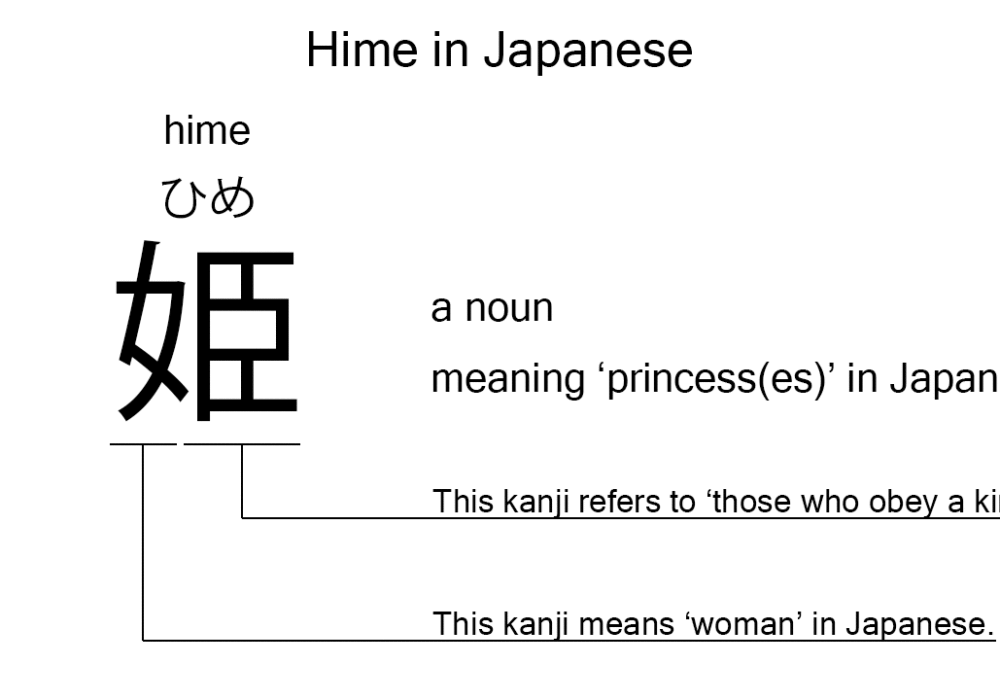
Hime is the Japanese word for ‘princess’, explained

What does "hime" mean in Japanese? Native speakers say "hime" to mean 'princess' in Japanese. Perhaps, some Japanese learners know this word as it is sometimes used in Japanese movies, songs, novels, manga, anime, and the like. In this blog post, however, I will explain this word in detail based on its kanji …

[Read more...] about Hime is the Japanese word for ‘princess’, explained

June 21, 2021 By Masaki Mori

Tsumaranai can mean ‘boring’ or ‘bored’ in Japanese, explained

What does "tsumaranai" mean in Japanese? Native speakers say "tsumaranai" to mean 'boring' or 'bored' in Japanese. Probably, many Japanese learners know this word as it is often used in Japanese movies, songs, novels, manga, anime, and the like. In this blog post, however, I will explain this word together with its …

[Read more...] about Tsumaranai can mean ‘boring’ or ‘bored’ in Japanese, explained

June 17, 2021 By Masaki Mori

Itai is the Japanese word for ‘painful’, ‘sore’, ‘hurt’, or ‘ouch’, explained

What does "itai" mean in Japanese? Native speakers say "itai" to mean 'painful', 'sore', or 'hurt' in Japanese. Basically it is an i-adjective, but can also work as an interjection, especially in speaking, to mean 'ouch' in Japanese. In this blog post, I will explain this word with its major conjugations. And also, …

[Read more...] about Itai is the Japanese word for ‘painful’, ‘sore’, ‘hurt’, or ‘ouch’, explained

June 13, 2021 By Masaki Mori

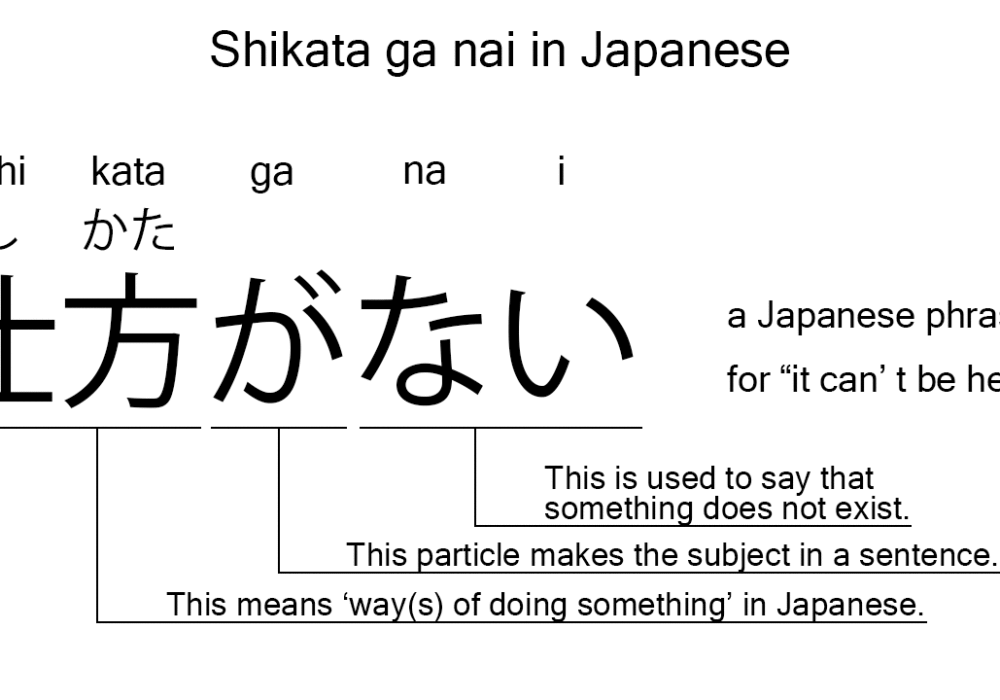
Shikata ga nai is the Japanese phrase for ‘it can’t be helped’

What does "shikata ga nai" mean in Japanese? Native speakers say "shikata ga nai" often to mean 'it can't be helped' in Japanese. Perhaps, some Japanese learners know this phrase as it is sometimes used in Japanese conversations. In this blog post, however, I will explain it in detail based on its grammatical …

[Read more...] about Shikata ga nai is the Japanese phrase for ‘it can’t be helped’

June 7, 2021 By Masaki Mori

Mendokusai is the Japanese adjective for ‘annoying’ or ‘bothersome’

What does "mendokusai" mean in Japanese? Japanese people say "mendokusai" to mean 'annoying', 'bothersome', or 'troublesome'. In this blog post, I will explain this word in detail based on its components. And also, I will explain its major conjugations. My explanations would help Japanese learners to use …

[Read more...] about Mendokusai is the Japanese adjective for ‘annoying’ or ‘bothersome’

June 6, 2021 By Masaki Mori

Taberu is the Japanese verb for ‘to eat’, explained

What does "taberu" mean in Japanese? Native speakers say "taberu" to mean 'to eat' in Japanese. Perhaps, some Japanese learners know this verb well as it is often used in Japanese conversations. In this blog post, however, I will explain this verb with its major conjugations. And also, I will explain how to use them …

[Read more...] about Taberu is the Japanese verb for ‘to eat’, explained

June 4, 2021 By Masaki Mori

Hoshii is the Japanese i-adjective often translated as ‘to want’

What does "hoshii" mean in Japanese? Native speakers say "hoshii" to mean 'to want' in Japanese. It is an i-adjective in Japanese, but often translated into English as 'to want'. Perhaps, some Japanese learners know this word as it is often used in Japanese conversations. In this blog post, however, I will explain …

[Read more...] about Hoshii is the Japanese i-adjective often translated as ‘to want’

« Previous Page
Next Page »

Footer

Pages

  • Author

Categories

  • adjectives
  • adverbs
  • grammar
  • nouns
  • particles
  • translation
  • verbs
  • vocabulary

Written by Masaki Mori

Engineer and industrial translator for more than ten years. I teach Japanese to spread the Japanese culture. Read More…

Follow Me on Social Media

  • Instagram
  • Twitter

Feed

  • RSS

Copyright © 2017–2026 Japanese Particles Master All Rights Reserved.