What does “itterasshai” mean in Japanese?
English does not have a perfect translation for “itterasshai”, but it is often translated as “see you later”, “have a good day”, or such. Probably, some Japanese learners know this phrase as it is sometimes used in Japanese movies, novels, manga, anime, and the like. In this blog post, however, I will explain this phrase in detail based on its grammatical components. And also, I will explain how to use it through example sentences. My explanations would help Japanese learners understand “itterasshai” more clearly. Then, let’s get started!
Contents
- Definition and meanings of “itterasshai”
- What does “itterasshai” literally mean in Japanese?
- Summary
Definition and meanings of “itterasshai”
Let me start with the definition and meanings of “itterasshai”.
- itterasshai – 行ってらっしゃい (いってらっしゃい) : a Japanese send-off phrase, but often translated into English as “see you later”, “have a good day”, “take care”, “come straight home”, or such.
Japanese native speakers use this phrase when they send someone off but they know they will see him/her later again. So, its usage is close to that of the English phrase, “see you later”, I think.
The definition and meanings are not that difficult. To understand this phrase more clearly, however, let me explain its grammatical components in detail, one by one.
What does “itterasshai” literally mean in Japanese?
“Itterasshai” consists of the following three components:
- it – 行っ (いっ) : one conjugation of the verb, “iku“, which means ‘to go’ in Japanese. In the phrase, it has been conjugated for the better connection with its following word.
- te – て : a conjunctive particle used after a verb, adjective, or auxiliary verb to make its te form. In the example, this is used after “it” to make its te form, “it te”. Te-formed words can work to make a chronological order in a sentence.
- rasshai – らっしゃい : derived from “irasshai” which is the command form of “irassharu”. This can politely mean ‘to come’, ‘to go’, or ‘to be’ in Japanese.
From these three components, we can understand that “itterasshai” literally means ‘go and then come’ politely in Japanese. This literal interpretation well represents the actual usage of the phrase, I think. Japanese native speakers use the phrase to pray for a safe departure and a safe way home when someone is leaving. For example, parents use it every morning to say “goodbye and come home safely” to their children.
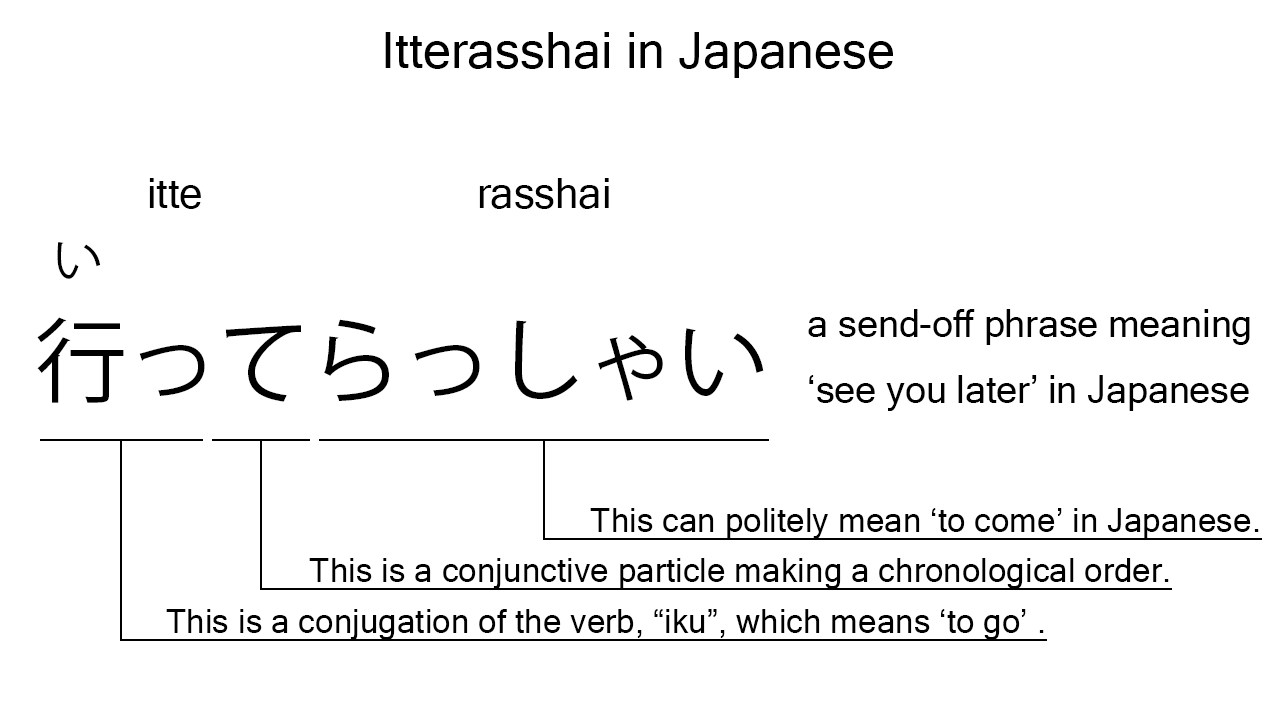
When we meet new Japanese phrases, we should check their grammatical components in detail to understand their meanings clearly and deeply. In many cases, components tell us a lot about the meanings of the phrases they form. Actually, here, we could get the better understanding of “itterasshai” through the detailed check above.
So far, I’ve explained the definition and meanings of “itterasshai” together with its grammatical components. Then, let me explain how to use it through the example sentences below.
Example #1: when and how to use “itterasshai”
itterasshai. kiwotsukete – 行ってらっしゃい。気をつけて (いってらっしゃい。きをつけて)
Goodbye. Please take care.
Below is the new phrase used in the example sentence.
- kiwotsukete – 気をつけて (きをつけて) : a phrase meaning ‘take care’ in Japanese.
This is a typical usage of “itterasshai”. Japanese native speakers use this phrase when they want to say “goodbye” to someone who is about to leave but they know (or believe) they will see him/her later again. In this example, the phrase works together with another one, “kiwotsukete”, to additionally say “please take care”.
Example #2: another usage of “itterasshai”
kanojo wa kare ni 「itterasshai」 to it ta – 彼女は彼に「行ってらっしゃい」と言った (かのじょはかれに「いってらっしゃい」といった)
She said “see you later” to him.
Below are the new words used in the example sentence.
- kanojo – 彼女 (かのじょ) : a pronoun meaning ‘she’ in Japanese.
- wa – は : a binding particle working as a case marker or topic marker. In the example, this works after “kanojo” to make the subject in the sentence.
- kare – 彼 (かれ) : a pronoun meaning ‘he’ in Japanese.
- ni – に : a case particle used to say to whom an action is directed. In the example, this is used after “kare” to say to whom she said “itterasshai”.
- to – と : a case particle working as a quote marker. In the example, this works after the clause to indicate what she said to him.
- it – 言っ (いっ) : one conjugation of the verb, “iu“, which means ‘to say’, ‘to tell’, or such in Japanese. In the example, it has been conjugated for the better connection with its following word.
- ta – た : an auxiliary verb used after a verb, adjective, or auxiliary verb to make its past tense form. Probably, this is well known as a part of Japanese ta form. In the example, this is used after “it” to make its past tense form, “it ta”.
This is another typical usage of “itterasshai”. In the example, it has been translated as just “see you later”, but the Japanese sentence has the nuance of “go and come back safely”.
Summary
In this blog post, I’ve explained the definition and meanings of “itterasshai” in detail based on its grammatical components. And also, I’ve explained how to use it through the example sentences. Let me summarize them as follows.
- itterasshai – 行ってらっしゃい (いってらっしゃい) : a Japanese send-off phrase, but often translated into English as “see you later”, “have a good day”, “take care”, “come straight home”, or such. This phrase literally means ‘go and then come’ politely in Japanese. This literal interpretation well represents the actual usage of the phrase, I think. Japanese native speakers use this to pray for a safe departure and a safe way home when someone is leaving. For example, parents use this every morning to say “goodbye and come home safely” to their children.
Hope my explanations are understandable and helpful for Japanese learners.
