• Skip to main content
  • Skip to primary sidebar
  • Skip to footer

Japanese Particles Master

particles for perfection

  • Home
  • grammar
  • particles
  • nouns
  • verbs
  • adjectives
  • adverbs
  • translation
  • Author

grammar

Learn grammar rules on Japanese Particles Master. The detailed breakdowns and in-depth explanations of the example sentences will help you to improve your Japanese skills.

April 12, 2023 By Masaki Mori

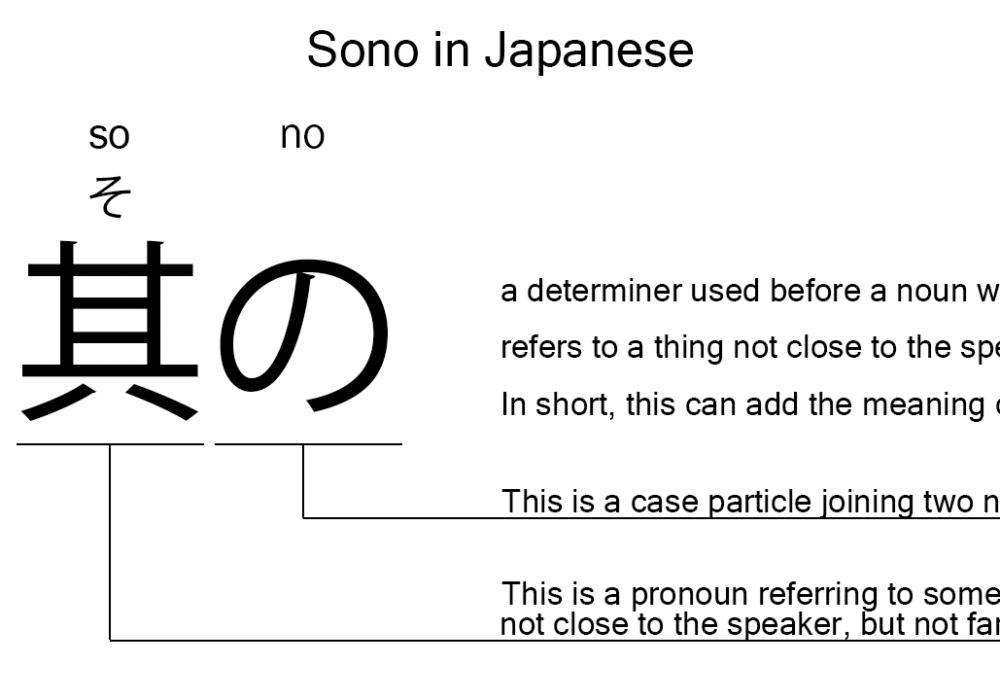
Sono can often work as determiner to mean “that” in Japanese

What does "sono" mean in Japanese? Native speakers often use "sono" as a determiner to add the meaning of 'that' in Japanese. Perhaps, some Japanese learners know this word as it is sometimes used in Japanese conversations. In this blog post, however, I will explain this word in detail together with its kanji …

[Read more...] about Sono can often work as determiner to mean “that” in Japanese
April 11, 2023 By Masaki Mori

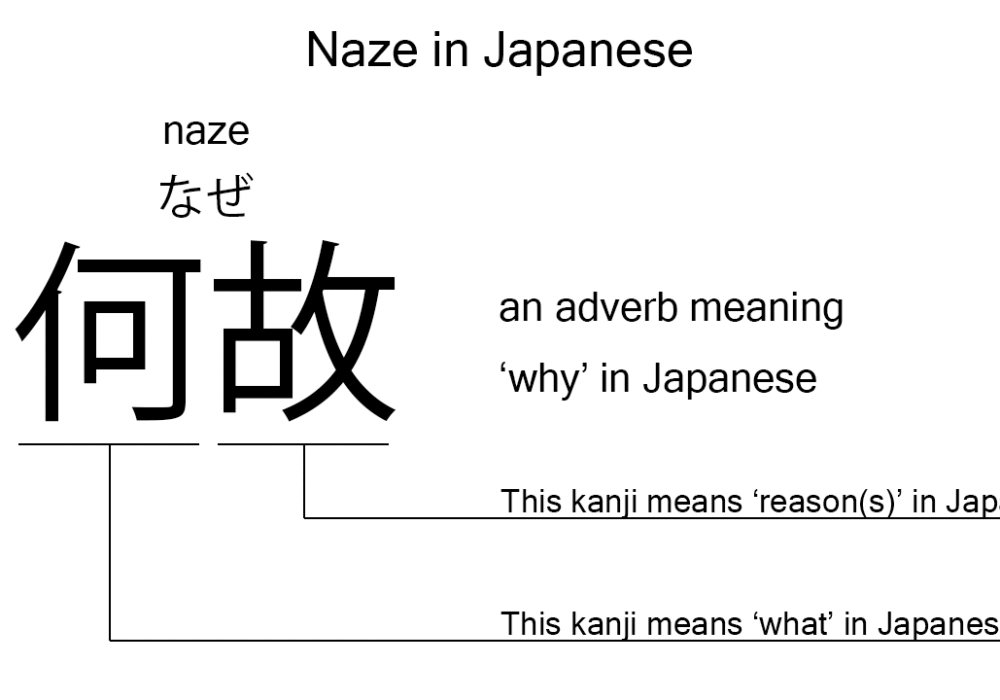
Naze: we can use it to make why questions in Japanese

What does "naze" mean in Japanese? Native speakers say "naze" normally to mean 'why' in Japanese. Probably, some Japanese learners know this word as it is sometimes used in Japanese conversations. In this blog post, however, I will explain this word in detail based on its kanji expression. And also, I will explain …

[Read more...] about Naze: we can use it to make why questions in Japanese

December 5, 2022 By Masaki Mori

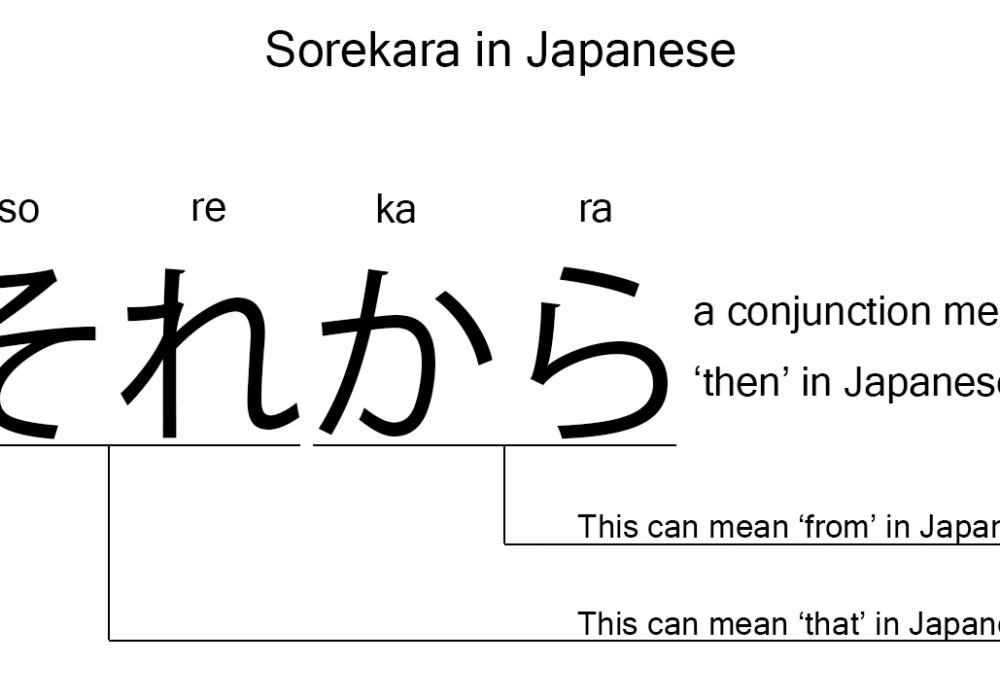
Sorekara can work in two different ways in Japanese, explained

What does "sorekara" mean in Japanese? Native speakers say "sorekara" to mean 'then', 'after that', 'in addition', or just 'and' in Japanese. Perhaps, some Japanese learners know this conjunction as it is sometimes used in Japanese conversations. In this blog post, however, I will explain it in detail based on its …

[Read more...] about Sorekara can work in two different ways in Japanese, explained

June 2, 2022 By Masaki Mori

Koto works to make a noun phrase or clause in a Japanese sentence

How does "koto" work in Japanese? There are some homophones in Japanese. When native speakers use "koto" in a sentence, however, it most probably works to make a noun phrase or noun clause in the sentence. This role is often explained well in Japanese textbooks, but I will explain it in detail again with example …

[Read more...] about Koto works to make a noun phrase or clause in a Japanese sentence

April 26, 2022 By Masaki Mori

Nazenara is the Japanese word for ‘because’, explained

What does "nazenara" mean in Japanese? Native speakers say "nazenara" to mean 'because', 'since', or 'as' in Japanese. So, they use it to give the reason for something. The concept is very clear and simple, I think. In this blog post, however, I will explain this word with example sentences. My explanations would …

[Read more...] about Nazenara is the Japanese word for ‘because’, explained

April 8, 2022 By Masaki Mori

Shikashi is mainly used in two different ways in Japanese, explained

What does "shikashi" mean in Japanese? Probably, many Japanese learners know "shikashi" as it is often used in Japanese conversations. Native speakers use it mainly in two different ways: to mean 'but' to join two sentences or phrases; to mean 'by the way' to shift a topic. In this blog post, I will explain these …

[Read more...] about Shikashi is mainly used in two different ways in Japanese, explained

April 2, 2022 By Masaki Mori

Soshite is mainly used in two different ways in Japanese, explained

What does "soshite" mean in Japanese? Probably, many Japanese learners know "soshite" as it is quite often used in Japanese conversations. Native speakers use it mainly in two different ways: to mean 'then'; to mean 'and'. In this blog post, I will explain these two types of "soshite" with example sentences. My …

[Read more...] about Soshite is mainly used in two different ways in Japanese, explained

January 4, 2022 By Masaki Mori

Koko can work mainly in the three different ways in Japanese, explained

What does "koko" mean in Japanese? There are multiple ways to use "koko" in the Japanese language, but native speakers normally use it to refer to a place physically close to them, the point in time where they are, or a certain time period to or from now. In this blog post, I will explain this word in detail based …

[Read more...] about Koko can work mainly in the three different ways in Japanese, explained

March 5, 2021 By Masaki Mori

How to make nouns from adjectives in Japanese, explained

How to make nouns from adjectives in Japanese Japanese people make nouns from adjectives by using the suffixes, "sa" and "mi". These can work in very similar ways that English suffixes like "-ness", "-tion", and the like do. In this blog post, I will explain how to use them to make nouns from adjectives in Japanese. …

[Read more...] about How to make nouns from adjectives in Japanese, explained

January 24, 2021 By Masaki Mori

Japanese te form has four important roles, explained

What is the Japanese te form? When we say "te form", it normally refers to the combination of a word and the conjunctive particle, "te". The word can be either a verb, i-adjective, or auxiliary verb. This form has four important roles in the Japanese language. In this blog post, therefore, I will explain them in …

[Read more...] about Japanese te form has four important roles, explained

Next Page »

Primary Sidebar

Written by Masaki Mori

Engineer and industrial translator for more than ten years. I teach Japanese to spread the Japanese culture. I always try to explain every single new word so that Japanese learners can understand the correct meanings of example sentences. Read More…

Follow Me on Social Media

  • Instagram
  • Twitter

Learn more words by kanji groups

Kanji for bad Kanji for beauty Kanji for big Kanji for cat Kanji for child Kanji for day Kanji for devil Kanji for eye Kanji for fire Kanji for god Kanji for ground Kanji for hand Kanji for he Kanji for heart Kanji for heaven Kanji for mood Kanji for moon Kanji for mouth Kanji for night Kanji for now Kanji for one of a pair Kanji for person Kanji for rain Kanji for time Kanji for tree Kanji for week Kanji for what Kanji for woman Kanji for year

Check recent posts

  • Komorebi is the Japanese word for ‘sunlight through leaves’
  • Nikkouyoku is the Japanese word for ‘sunbathing’, explained
  • Shinrinyoku is the Japanese word for ‘forest bathing’, explained
  • Hatsutaiken is the Japanese word for ‘first experience’
  • Hatsuyuki is the Japanese word for ‘first snow of the season’

Are you still looking for something?

Footer

Pages

  • Author

Categories

  • adjectives
  • adverbs
  • grammar
  • nouns
  • particles
  • translation
  • verbs
  • vocabulary

Written by Masaki Mori

Engineer and industrial translator for more than ten years. I teach Japanese to spread the Japanese culture. Read More…

Follow Me on Social Media

  • Instagram
  • Twitter

Feed

  • RSS

Copyright © 2017–2026 Japanese Particles Master All Rights Reserved.