• Skip to main content
  • Skip to primary sidebar
  • Skip to footer

Japanese Particles Master

particles for perfection

  • Home
  • grammar
  • particles
  • nouns
  • verbs
  • adjectives
  • adverbs
  • translation
  • Author

translation

Learn translations on Japanese Particles Master. The detailed breakdowns and in-depth explanations of the example sentences will help you to improve your Japanese skills.

September 10, 2020 By Masaki Mori

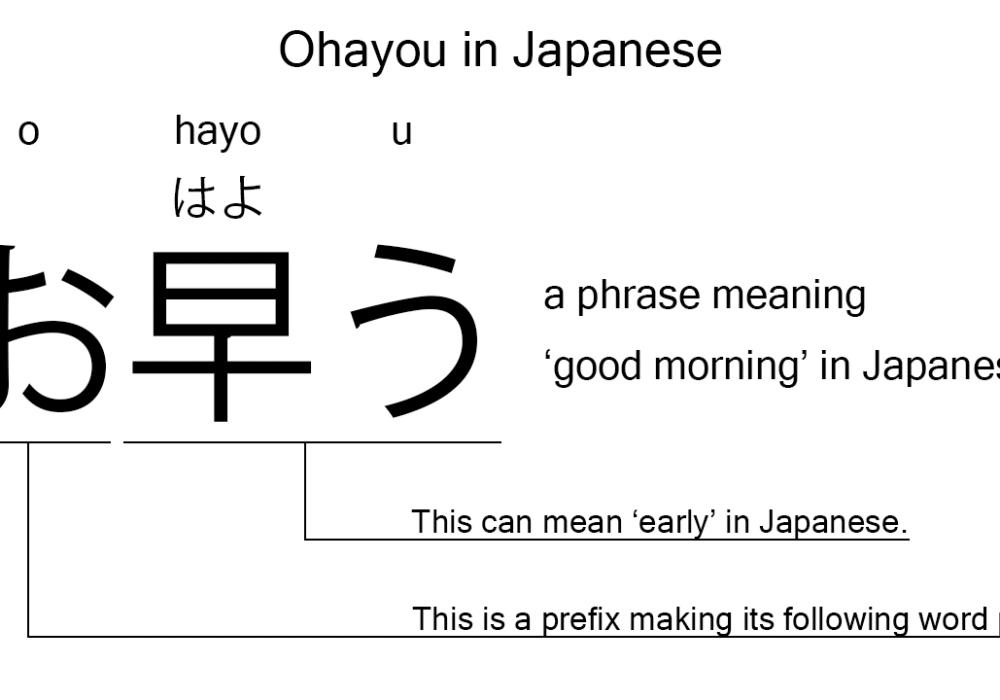
Ohayo and Ohayou: Japanese morning greetings, explained

What do "ohayo" and "ohayou" mean in Japanese? Japanese native speakers use these two phrases more or less in the same way: to friendly say "good morning" in Japanese. Probably, many Japanese learners know these two as both are often used in Japanese movies, songs, novels, manga, anime, and the like. In this blog …

[Read more...] about Ohayo and Ohayou: Japanese morning greetings, explained
August 26, 2020 By Masaki Mori

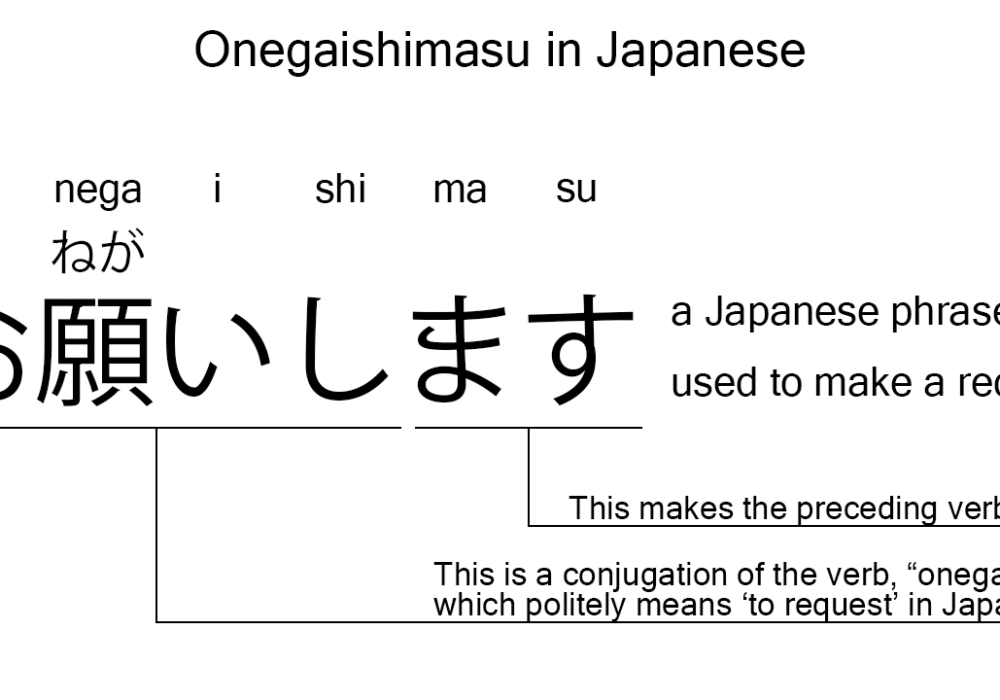
Onegaishimasu is the Japanese phrase to make a request

What does "onegaishimasu" mean in Japanese? Native speakers say "onegaishimasu" to make requests in Japanese. Perhaps, some Japanese learners know this phrase as it is sometimes used in Japanese conversations. In this blog post, however, I will explain it in detail based on its grammatical components. And also, I …

[Read more...] about Onegaishimasu is the Japanese phrase to make a request

June 24, 2020 By Masaki Mori

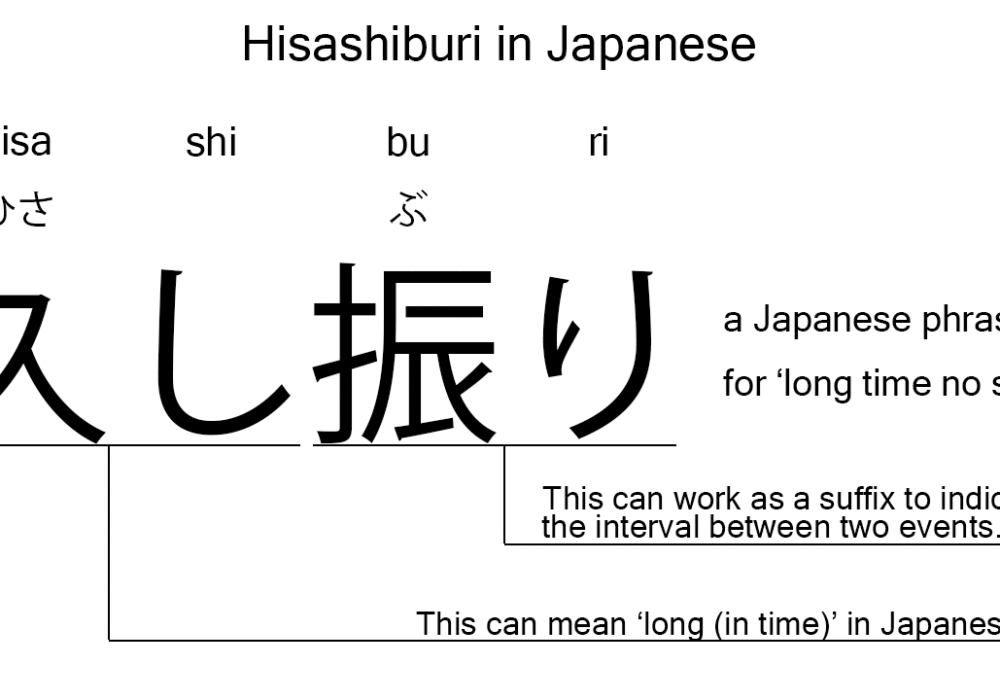
Hisashiburi is the Japanese phrase for ‘long time no see’, explained

What does "hisashiburi" mean in Japanese? Native speakers say "hisashiburi" to mean 'long time no see' in Japanese. Perhaps, some Japanese learners know this phrase as it is sometimes used in Japanese textbooks. In this blog post, however, I will explain it in detail based on its grammatical components. And also, I …

[Read more...] about Hisashiburi is the Japanese phrase for ‘long time no see’, explained

April 8, 2020 By Masaki Mori Leave a Comment

Chotto matte: what does it mean & how does it work in Japanese?

What does "chotto matte" mean in Japanese? Native speakers say "chotto matte" to mean 'just a moment' or 'wait a moment' in Japanese. Perhaps, some Japanese learners know this phrase as it is often used in Japanese conversations. In this blog post, however, I will explain this phrase in detail based on its …

[Read more...] about Chotto matte: what does it mean & how does it work in Japanese?

April 6, 2020 By Masaki Mori

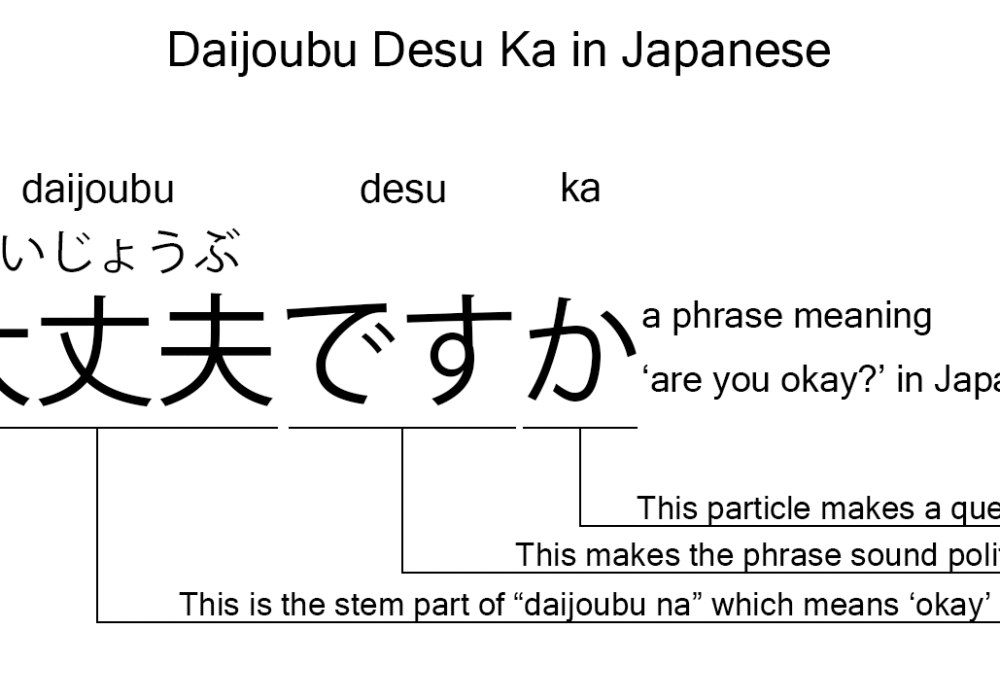
Daijoubu desu ka is the Japanese phrase for ‘are you okay?’

What does "daijoubu desu ka" mean in Japanese? Native speakers say "daijoubu desu ka" to mean 'are you okay?' in Japanese. Perhaps, some Japanese learners know this phrase as it is sometimes used in Japanese conversations. In this blog post, however, I will explain it in detail based on its grammatical components. …

[Read more...] about Daijoubu desu ka is the Japanese phrase for ‘are you okay?’

April 2, 2020 By Masaki Mori

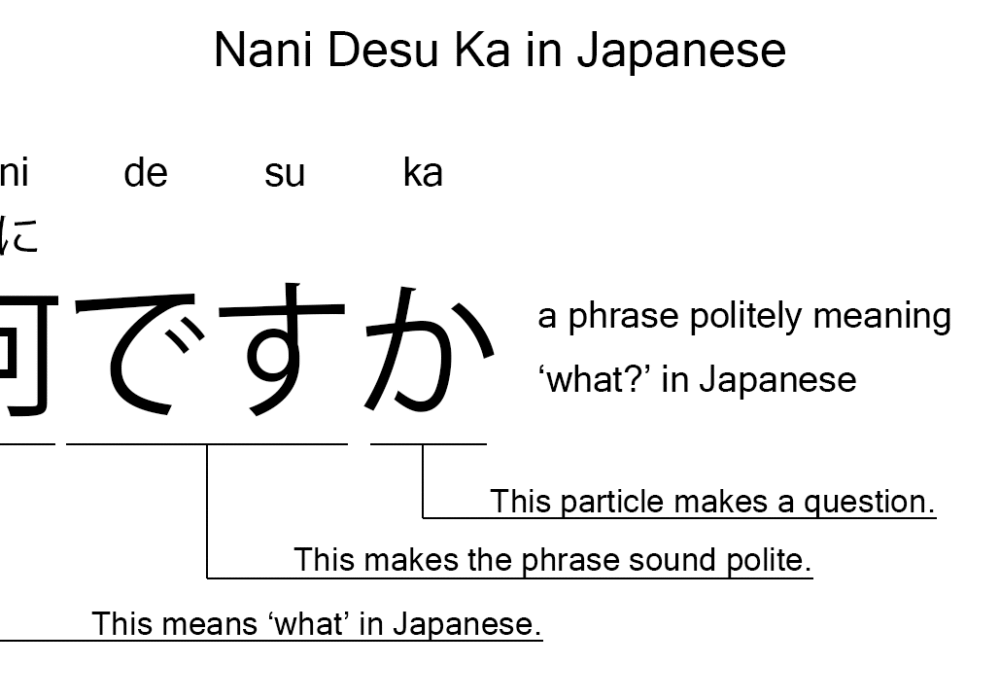
Nani desu ka: what does it mean & why is it weird?

What does "nani desu ka" mean in Japanese? Some may say "nani desu ka" to mean 'what?' in Japanese. Perhaps, some Japanese learners know this phrase as it is sometimes used on the internet and the like. In this blog post, however, I will explain this phrase in detail based on its grammatical components. And also, I …

[Read more...] about Nani desu ka: what does it mean & why is it weird?

March 26, 2020 By Masaki Mori

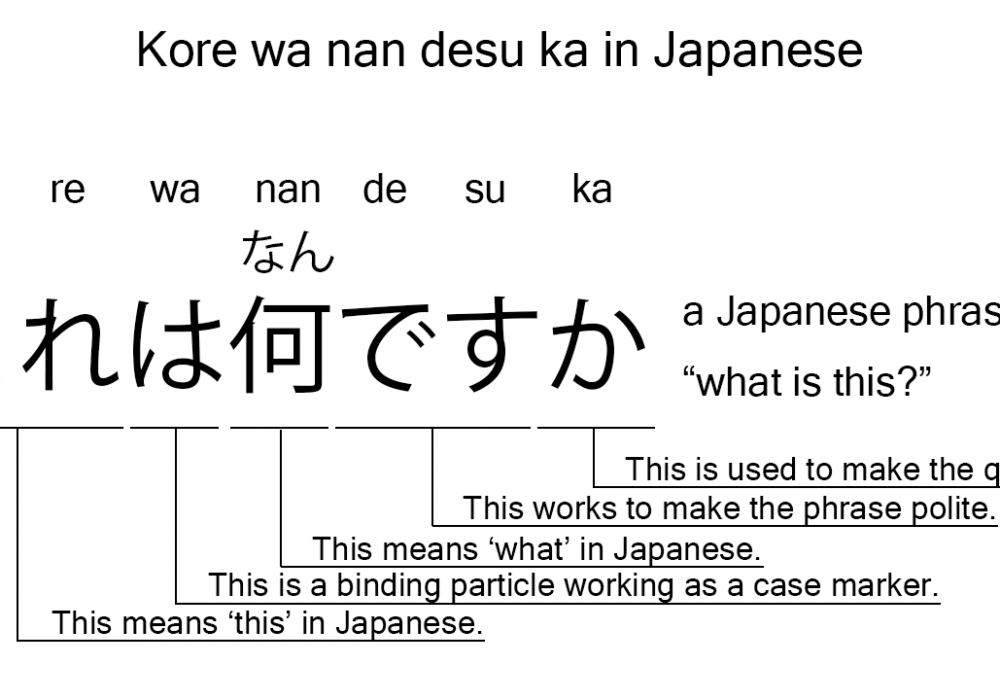
Kore wa nan desu ka – asking ‘what is this?’ in Japanese

What does "kore wa nan desu ka" mean in Japanese? Native speakers say "kore wa nan desu ka" to mean 'what is this?' in Japanese. Perhaps, some Japanese learners know this phrase as it is sometimes used in Japanese conversations. In this blog post, however, I will explain this phrase in detail based on its …

[Read more...] about Kore wa nan desu ka – asking ‘what is this?’ in Japanese

March 24, 2020 By Masaki Mori

Hungry in Japanese: “onaka ga suita” or “onaka ga hetta”, explained

How to say "hungry" in Japanese In the Japanese language, there are two major options: "onaka ga suita" and "onaka ga hetta". Both can be used to say 'hungry' in Japanese. In this blog post, I will explain them in detail based on their components. And also, I will explain how to use them through example sentences. …

[Read more...] about Hungry in Japanese: “onaka ga suita” or “onaka ga hetta”, explained

March 24, 2020 By Masaki Mori

Tsukareta is the Japanese phrase for ‘tired’, explained

What does "tsukareta" mean in Japanese? Native speakers say "tsukareta" to mean 'tired' or 'I'm tired' in Japanese. Perhaps, some Japanese learners know this phrase well because it is often used in Japanese movies, manga, anime, and the like. In this blog post, however, I will explain this phrase in detail based on …

[Read more...] about Tsukareta is the Japanese phrase for ‘tired’, explained

March 22, 2020 By Masaki Mori

Maji: Japanese people use it to say “really?” in conversations

What does "maji" mean in Japanese? Japanese native speakers often say "maji" to mean "really?", "really", or such in daily conversations. When they raise its pitch, it means 'really?'; when they don't, it just means 'really'. Probably, many Japanese learners know this word as it is often used in Japanese movies, …

[Read more...] about Maji: Japanese people use it to say “really?” in conversations

« Previous Page
Next Page »

Primary Sidebar

Written by Masaki Mori

Engineer and industrial translator for more than ten years. I teach Japanese to spread the Japanese culture. I always try to explain every single new word so that Japanese learners can understand the correct meanings of example sentences. Read More…

Follow Me on Social Media

  • Instagram
  • Twitter

Learn more words by kanji groups

Kanji for bad Kanji for beauty Kanji for big Kanji for cat Kanji for child Kanji for day Kanji for devil Kanji for eye Kanji for fire Kanji for god Kanji for ground Kanji for hand Kanji for he Kanji for heart Kanji for heaven Kanji for mood Kanji for moon Kanji for mouth Kanji for night Kanji for now Kanji for one of a pair Kanji for person Kanji for rain Kanji for time Kanji for tree Kanji for week Kanji for what Kanji for woman Kanji for year

Check recent posts

  • Komorebi is the Japanese word for ‘sunlight through leaves’
  • Nikkouyoku is the Japanese word for ‘sunbathing’, explained
  • Shinrinyoku is the Japanese word for ‘forest bathing’, explained
  • Hatsutaiken is the Japanese word for ‘first experience’
  • Hatsuyuki is the Japanese word for ‘first snow of the season’

Are you still looking for something?

Footer

Pages

  • Author

Categories

  • adjectives
  • adverbs
  • grammar
  • nouns
  • particles
  • translation
  • verbs
  • vocabulary

Written by Masaki Mori

Engineer and industrial translator for more than ten years. I teach Japanese to spread the Japanese culture. Read More…

Follow Me on Social Media

  • Instagram
  • Twitter

Feed

  • RSS

Copyright © 2017–2026 Japanese Particles Master All Rights Reserved.