What do “sayonara” and “sayounara” mean in Japanese?
Native speakers often use these two phrases in the same way: to mean ‘goodbye’ in Japanese. Probably, many Japanese learners know these phrases well as they are quite often used in Japanese textbooks. In this blog post, however, I will explain both in detail based on the grammatical background. And also, I will explain how to use them through example sentences. My explanations would help Japanese learners understand “sayonara” and “sayounara” more clearly. Then, let’s get started!
Contents
- Definition and meaning of “sayonara”
- Definition and meaning of “sayounara”
- Where did “sayounara” originally come from?
- Sayonara vs. sayounara: which to use
- Summary
Definition and meaning of “sayonara”
Let me start with the definition and meaning of “sayonara”.
- sayonara – さよなら : a Japanese phrase for ‘goodbye’.
Native speakers use this phrase to say “goodbye” in Japanese. This is widely considered as the colloquial version of the other one, “sayounara”. Let me explain it as follows.
Definition and meaning of “sayounara”
The definition and meaning of “sayounara” are the same as those of the shortened version. Therefore,
- sayounara – さようなら : a Japanese phrase for ‘goodbye’.
This phrase can work in more or less the same way as the shortened version does. Like other longer phrases, however, “sayounara” is widely considered suitable for more formal situations. In general, shortened phrases are considered less formal.
The definition and meaning are simple and clear. To understand this phrase more clearly, however, let me explain its grammatical components in detail.
Where did “sayounara” originally come from?
The longer phrase, “sayounara”, consists of the following two components:
- sayou – 左様 (さよう) : an old Japanese word referring to what someone has just said. This can be translated into English as ‘so’.
- nara – なら : the shortened version of the conjunction, “naraba”, which can work to make a conditional clause in a sentence. This is often translated into English as ‘if’.
These two components tell us that “sayounara” literally means ‘if so’ in Japanese. This literal interpretation is very different from what the phrase really means. Japanese people in the past, however, used the phrase to end a conversation. They often said at the end of a conversation, “if you say so, then.” This fact would help us understand why the phrase literally meaning ‘if so’ can work to mean ‘goodbye’ today, I think.
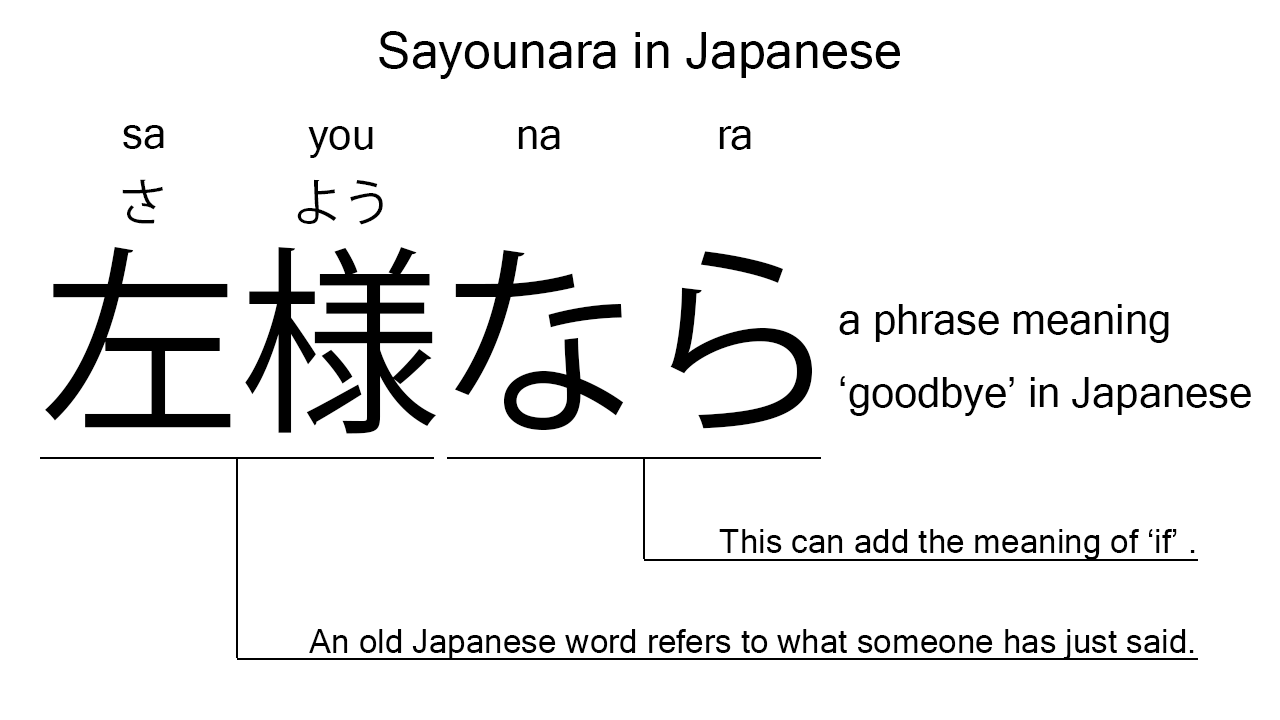
When we meet new Japanese phrases, we should check their components in detail to understand their meanings clearly and deeply. In many cases, components tell us a lot about the meanings of the phrases they form. Actually, here, we could get the better understanding of “sayounara” through the detailed check above.
Sayonara vs. sayounara: which to use
So far, I’ve explained the definitions and meanings of “sayonara” and “sayounara” in detail. Next, let me explain which we should use. Again, but “sayonara” is the shortened version of “sayounara”. In more formal situations, therefore, we should stick to the longer one. In daily conversations, by contrast, the shorter one is very acceptable. However, Japanese native speakers do not often differentiate one from the other in speaking as their pronunciations are quite similar. One has the “u” sound in the middle, but it is barely noticeable in fast conversations.
Then, let me explain how to use “sayonara” and “sayounara” through the example sentences below.
Example #1: how to use “sayonara”
kanojo wa boku ni 「sayonara」 to it ta – 彼女は僕に「さよなら」と言った (かのじょはぼくに「さよなら」といった)
She said to me, “Goodbye.”
Below are the new words used in the example sentence.
- kanojo – 彼女 (かのじょ) : a pronoun meaning ‘she’ in Japanese.
- wa – は : a binding particle working as a case marker or topic marker. In the example, this works after “kanojo” to make the subject in the sentence.
- boku – 僕 (ぼく) : a pronoun meaning ‘I’ in Japanese. This is used mainly by boys and young males.
- ni – に : a case particle used to say in which direction an action goes. In the example, this is used after “boku” to say to whom “kanojo” said “sayonara”.
- to – と : a case particle working as a quote marker. In the example, this works after the clause to indicate what “kanojo” said.
- it – 言っ (いっ) : one conjugation of the verb, “iu“, which means ‘to say’ in Japanese. In the example, it has been conjugated for the better connection with its following word.
- ta – た : an auxiliary verb used after a verb, adjective, or auxiliary verb to make its past tense form. In the example, this is used after “it” to make its past tense form, “it ta”.
This is a typical usage of “sayonara”. When we want to say “goodbye” in Japanese, this phrase is a good option. We should take care not to make it sound so serious, though.
Example #2: how to use “sayounara”
mainichi seito wa sensei ni 「sayounara」 to ii masu – 毎日生徒は先生に「さようなら」と言います (まいにちせいとはせんせいに「さようなら」といいます)
Every day, students say to teachers, “goodbye.”
Below are the new words used in the example sentence.
- mainichi – 毎日 (まいにち) : an adverb meaning ‘every day’ in Japanese.
- seito – 生徒 (せいと) : a noun meaning ‘student’ in Japanese. This can also work as plural. Learn more about Japanese plural.
- sensei – 先生 (せんせい) : a noun meaning ‘teacher’ in Japanese. This can also work as plural.
- ii – 言い (いい) : one conjugation of the verb, “iu”, which means ‘to say’ in Japanese. In the example, it has been conjugated for the better connection with its following word.
- masu – ます : an auxiliary verb used after a verb to make it polite. Probably, this is well known as a part of Japanese masu form. In the example, this is used after “ii” to make it sound polite.
This is a typical usage of “sayounara”. When we want to say “goodbye” in Japanese, this phrase is a good option, too.
Summary
In this blog post, I’ve explained the definitions and meanings of “sayonara” and “sayounara” in detail. And also, I’ve explained how to use them through the example sentences. Let me summarize them as follows.
- sayonara – さよなら : a Japanese phrase for ‘goodbye’. This is widely considered as the shortened version of “sayounara”, but can work in more or less the same way.
- sayounara – さようなら : a Japanese phrase for ‘goodbye’. Two parts, “sayou” and “nara”, literally mean ‘if so’ in Japanese. Japanese people in the past often said at the end of a conversation, “if you say so, then.” This is why the phrase literally meaning ‘if so’ can work to mean ‘goodbye’ today.
Hope my explanations are understandable and helpful for Japanese learners.
