• Skip to main content
  • Skip to primary sidebar
  • Skip to footer

Japanese Particles Master

particles for perfection

  • Home
  • grammar
  • particles
  • nouns
  • verbs
  • adjectives
  • adverbs
  • translation
  • Author

translation

Learn translations on Japanese Particles Master. The detailed breakdowns and in-depth explanations of the example sentences will help you to improve your Japanese skills.

June 13, 2021 By Masaki Mori

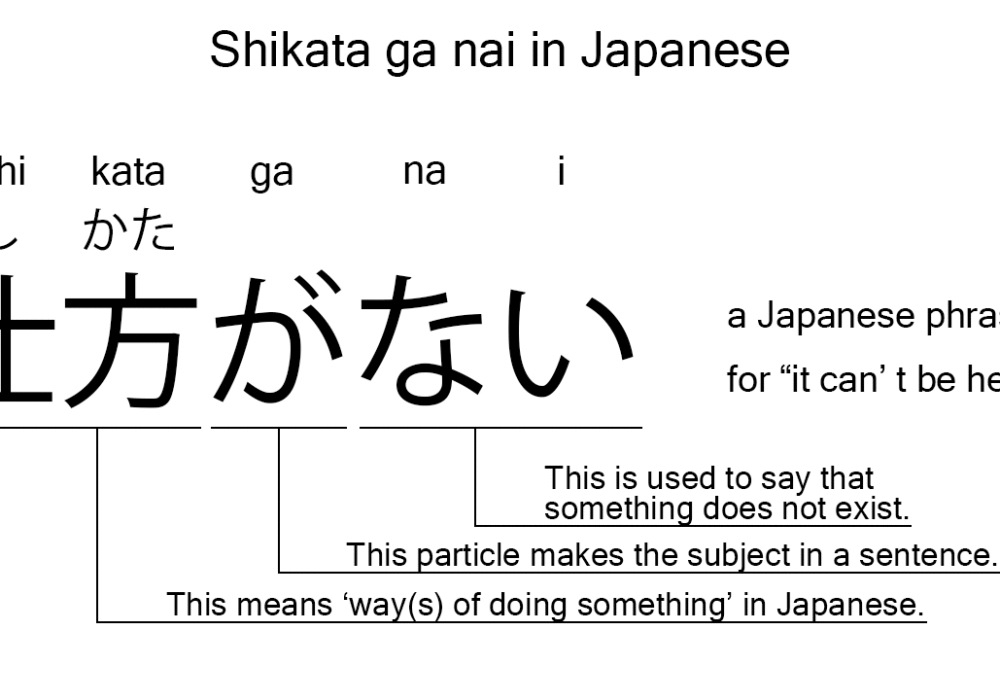
Shikata ga nai is the Japanese phrase for ‘it can’t be helped’

What does "shikata ga nai" mean in Japanese? Native speakers say "shikata ga nai" often to mean 'it can't be helped' in Japanese. Perhaps, some Japanese learners know this phrase as it is sometimes used in Japanese conversations. In this blog post, however, I will explain it in detail based on its grammatical …

[Read more...] about Shikata ga nai is the Japanese phrase for ‘it can’t be helped’
February 17, 2021 By Masaki Mori

Okawari is the Japanese word for ‘second helping’, explained

What does "okawari" mean in Japanese? Japanese people say "okawari" to mean 'second helping', 'another cup', 'another glass', or 'another one' in Japanese. In this blog post, I will explain this word in detail based on its components. And also, I will explain how to use it through example sentences. Let's get …

[Read more...] about Okawari is the Japanese word for ‘second helping’, explained

February 14, 2021 By Masaki Mori Leave a Comment

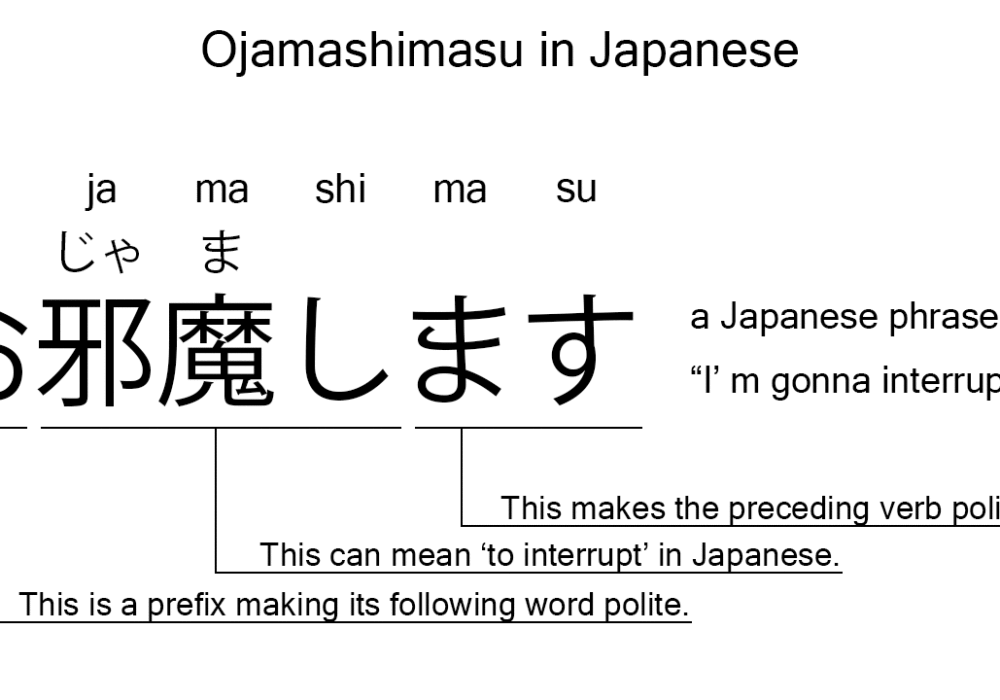
Ojamashimasu is the Japanese phrase for “I’m gonna interrupt you”

What does "ojamashimasu" mean in Japanese? When Japanese people enter someone's room or house, they would say "ojamashimasu" to mean 'thank you for inviting me', 'thank you for having me', or such. They would also use this phrase to say 'sorry to disturb you' when they talk to someone or interrupt a conversation. In …

[Read more...] about Ojamashimasu is the Japanese phrase for “I’m gonna interrupt you”

February 9, 2021 By Masaki Mori

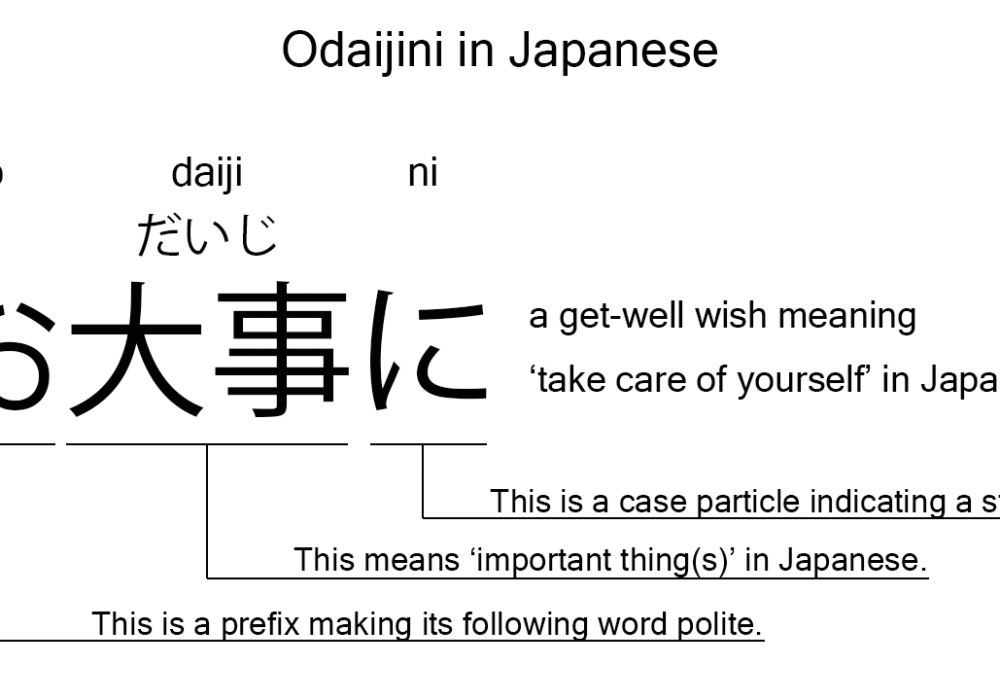
Odaijini is a Japanese get-well wish, explained

What does "odaijini" mean in Japanese? Native speakers say "odaijini" to mean 'take care of yourself' or 'get well soon' in Japanese. Perhaps, some Japanese learners know this phrase as it is sometimes used in Japanese conversations. In this blog post, however, I will explain it in detail based on its grammatical …

[Read more...] about Odaijini is a Japanese get-well wish, explained

January 17, 2021 By Masaki Mori

Omochikaeri in Japanese: “to go” or “takeaway”, explained

How to say "to go" or "takeaway" in Japanese Japanese people would say "omochikaeri" or use its less-polite version, "mochikaeri". In this blog post, I will explain these two expressions in detail. And also, I will explain how to use the polite expression through example sentences. My explanations would help …

[Read more...] about Omochikaeri in Japanese: “to go” or “takeaway”, explained

January 15, 2021 By Masaki Mori Leave a Comment

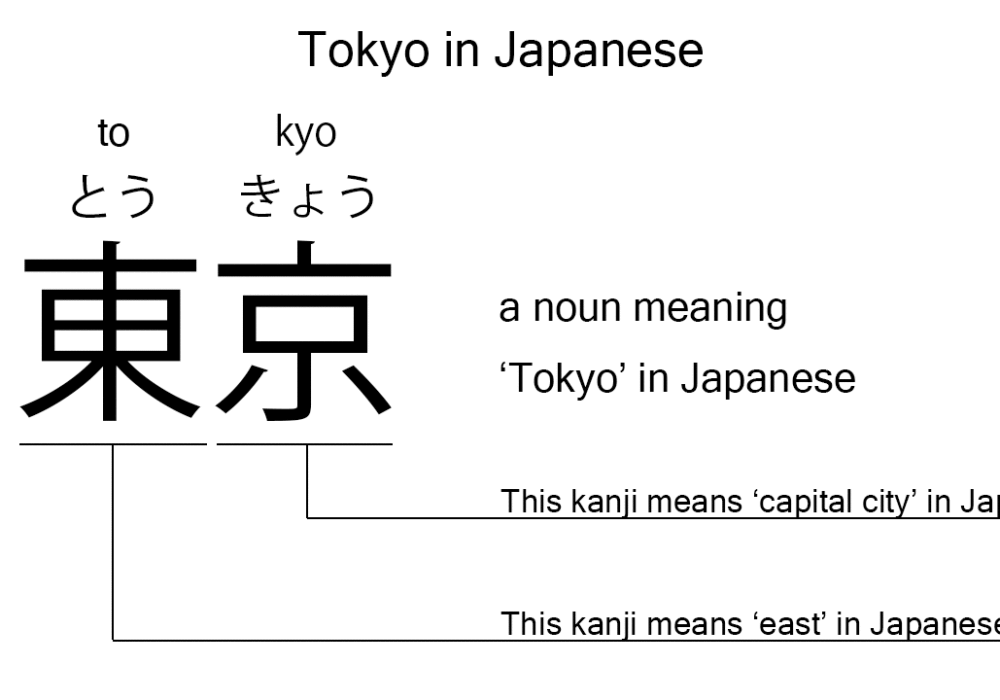
Tokyo is more than just the name of the capital of Japan, explained

What does "tokyo" mean in Japanese? Probably, many Japanese learners know the name of the capital of Japan: Tokyo. Most of them, however, do not know what it really means in Japanese. In this blog post, therefore, I will explain this name in detail based on its kanji expression. And also, I will explain how to use …

[Read more...] about Tokyo is more than just the name of the capital of Japan, explained

November 19, 2020 By Masaki Mori

Aka vs. Akai: which should we use to say “red” in Japanese?

How to say "red" in Japanese Native speakers say "aka" or "akai" to mean 'red' in Japanese. The first one is a noun; the second one is an adjective. In this blog post, I will explain these two words and how to use them through example sentences. My explanations would help Japanese learners to understand which one to …

[Read more...] about Aka vs. Akai: which should we use to say “red” in Japanese?

November 11, 2020 By Masaki Mori

Ao vs. Aoi: which should we use to say “blue” in Japanese?

How to say "blue" in Japanese Native speakers say "ao" or "aoi" to mean 'blue' in Japanese. The first one is a noun; the second one is an adjective. In this blog post, I will explain these two words and how to use them through example sentences. My explanations would help Japanese learners to understand which one to …

[Read more...] about Ao vs. Aoi: which should we use to say “blue” in Japanese?

October 19, 2020 By Masaki Mori

Choushi wa dou: “what’s up?” in Japanese, explained

What does "choushi wa dou" mean in Japanese? Japanese native speakers sometimes say "choushi wa dou" to ask "what's up?" In this blog post, I will explain this expression in detail based on its components. And also, I will explain its polite expression meaning "how are you?" in Japanese. I believe these …

[Read more...] about Choushi wa dou: “what’s up?” in Japanese, explained

October 2, 2020 By Masaki Mori

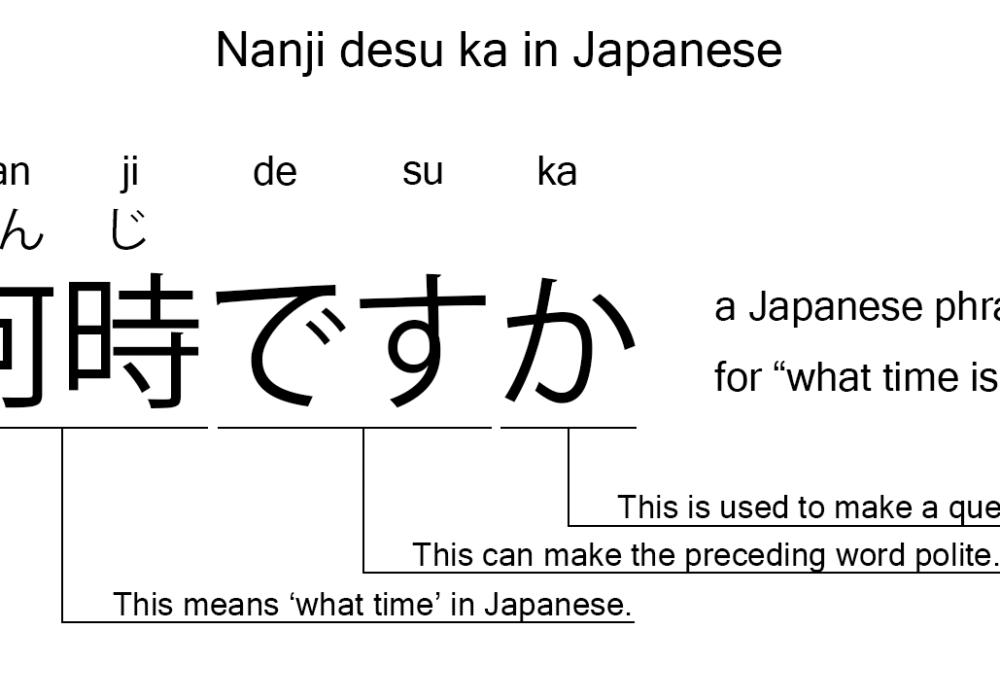
Nanji desu ka is the Japanese phrase for ‘what time is it?’

What does "nanji desu ka" mean in Japanese? Native speakers say "nanji desu ka" to ask the time in Japanese. Perhaps, some Japanese learners know this phrase as it is sometimes used in Japanese conversations. In this blog post, however, I will explain it in detail based on its grammatical components. And also, I …

[Read more...] about Nanji desu ka is the Japanese phrase for ‘what time is it?’

« Previous Page
Next Page »

Primary Sidebar

Written by Masaki Mori

Engineer and industrial translator for more than ten years. I teach Japanese to spread the Japanese culture. I always try to explain every single new word so that Japanese learners can understand the correct meanings of example sentences. Read More…

Follow Me on Social Media

  • Instagram
  • Twitter

Learn more words by kanji groups

Kanji for bad Kanji for beauty Kanji for big Kanji for cat Kanji for child Kanji for day Kanji for devil Kanji for eye Kanji for fire Kanji for god Kanji for ground Kanji for hand Kanji for he Kanji for heart Kanji for heaven Kanji for mood Kanji for moon Kanji for mouth Kanji for night Kanji for now Kanji for one of a pair Kanji for person Kanji for rain Kanji for time Kanji for tree Kanji for week Kanji for what Kanji for woman Kanji for year

Check recent posts

  • Komorebi is the Japanese word for ‘sunlight through leaves’
  • Nikkouyoku is the Japanese word for ‘sunbathing’, explained
  • Shinrinyoku is the Japanese word for ‘forest bathing’, explained
  • Hatsutaiken is the Japanese word for ‘first experience’
  • Hatsuyuki is the Japanese word for ‘first snow of the season’

Are you still looking for something?

Footer

Pages

  • Author

Categories

  • adjectives
  • adverbs
  • grammar
  • nouns
  • particles
  • translation
  • verbs
  • vocabulary

Written by Masaki Mori

Engineer and industrial translator for more than ten years. I teach Japanese to spread the Japanese culture. Read More…

Follow Me on Social Media

  • Instagram
  • Twitter

Feed

  • RSS

Copyright © 2017–2026 Japanese Particles Master All Rights Reserved.